ISO standard containers form the foundation of modern global logistics. These standardized steel boxes enable efficient, secure, and cost-effective movement of goods across ships, trains, and trucks worldwide. Whether you are new to shipping or a seasoned logistics professional, this comprehensive guide covers everything from definitions and technical standards to practical applications and selection advice.
An ISO standard container is a freight container manufactured according to International Organization for Standardization (ISO) specifications, ensuring global compatibility for intermodal transport across ships, trains, and trucks. Also known as intermodal containers, these units are engineered for stacking, lifting by cranes, and seamless transfer between different transport modes. Standardization minimizes handling costs, reduces damage, and creates an efficient worldwide logistics network. Without ISO standards, modern international trade as we know it would be far slower and more expensive.

Several key standards ensure containers are safe, compatible, and reliable.
This foundational standard defines external dimensions, tolerances, and minimum door openings. It ensures containers of the same nominal size can stack and interconnect perfectly anywhere in the world.
This standard governs the unique container numbering and marking system (detailed later in this guide), enabling global tracking and identification.
Containers must withstand rigorous tests for stacking loads, lifting forces, racking, and exposure to extreme weather and sea conditions.
Every container used in international transport requires a valid CSC plate. This certification, issued after testing by approved bodies, confirms structural safety. CSC plates must be renewed through periodic inspections (typically every 30 months) to maintain compliance.These standards collectively build trust and efficiency in the global supply chain.
ISO containers come in various configurations to suit different cargo needs.
The most common type, General Purpose (GP) or "dry" containers handle a wide range of non-perishable goods such as machinery, textiles, electronics, and consumer products. Available in 20ft and 40ft sizes, they feature fully enclosed steel construction with secure doors.
These provide an extra foot of internal height (9'6" externally) for approximately 10–15% more volume. Ideal for lightweight, bulky items like furniture, e-commerce goods, or packaging that maximizes space before reaching weight limits. Common sizes include 20HC, 40HC, and 45HC.

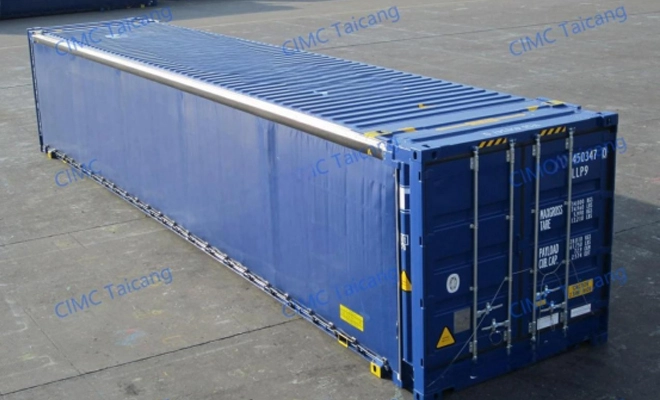
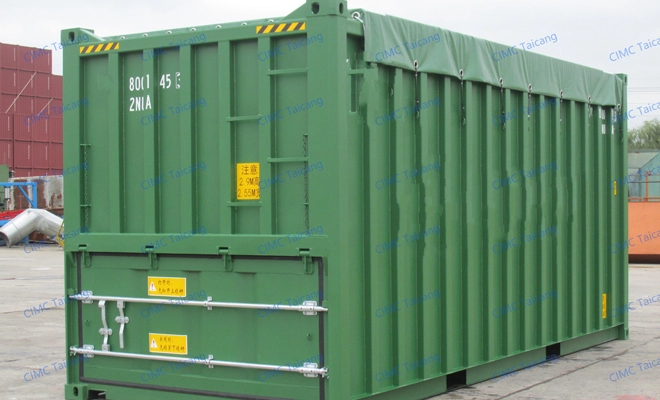
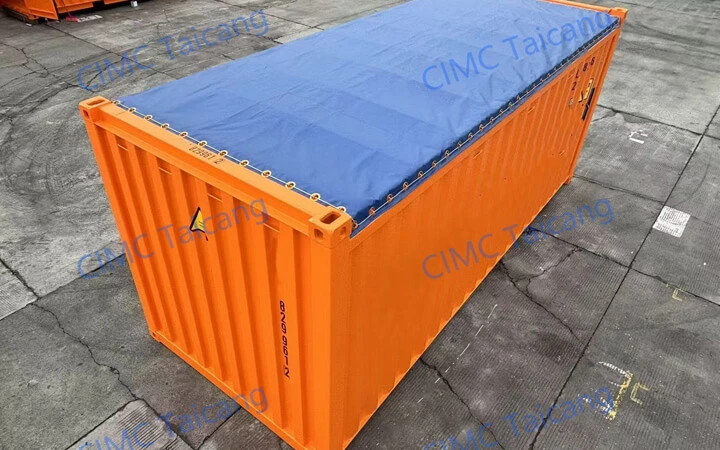
Open Top Containers are a specialized type of ISO shipping container designed for cargo that cannot be easily loaded through standard container doors. Unlike standard dry containers, they feature a removable or convertible roof system, typically covered with a heavy-duty tarpaulin instead of a fixed steel roof.
This structural design allows cargo to be loaded from the top using a crane or overhead lifting equipment, making the open top shipping container an ideal solution for oversized, tall, or irregularly shaped goods.
Because they still follow the structural framework of ISO 668 Container Standards, open top containers remain fully compatible with global shipping, stacking, and intermodal transport systems.
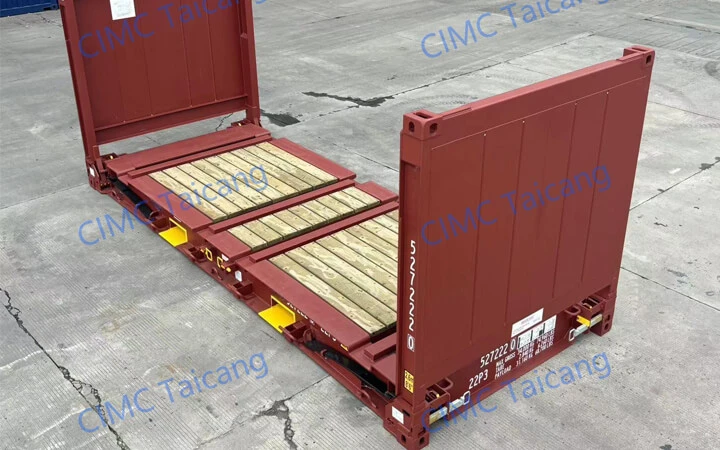
Flat Rack Containers are a type of specialized ISO shipping container designed for transporting heavy, oversized, and irregular cargo that cannot fit into standard enclosed containers. Unlike dry containers, a flat rack shipping container has no side walls and either fixed or collapsible end walls, creating an open platform structure that allows maximum loading flexibility.
Built on the standardized framework of ISO 668 Container Standards, flat racks maintain full compatibility with global shipping systems, including vessel stacking, terminal handling, and intermodal transport.
Equipped with integrated refrigeration units, these temperature-controlled containers transport perishables, pharmaceuticals, and frozen goods.
Framed cylindrical tanks for liquids, chemicals, gases, and food-grade products. They combine the strength of a container frame with specialized tank technology.
ISO standard container sizes are defined under international specifications such as ISO 668 Container Standards and related performance rules under ISO 1496 Series.
These standards ensure that containers can be:
Stacked safely on ships
Transferred between trucks, trains, and vessels
Used globally without modification
In short, ISO container sizes create global compatibility for shipping logistics.
All ISO container sizes are measured using TEU (Twenty-foot Equivalent Unit):
1 TEU = 20-foot container
2 TEU = 40-foot container
TEU is the global standard used by shipping lines, ports, and logistics companies to measure capacity and traffic volume.
The most popular sizes balance capacity, handling, and economics.
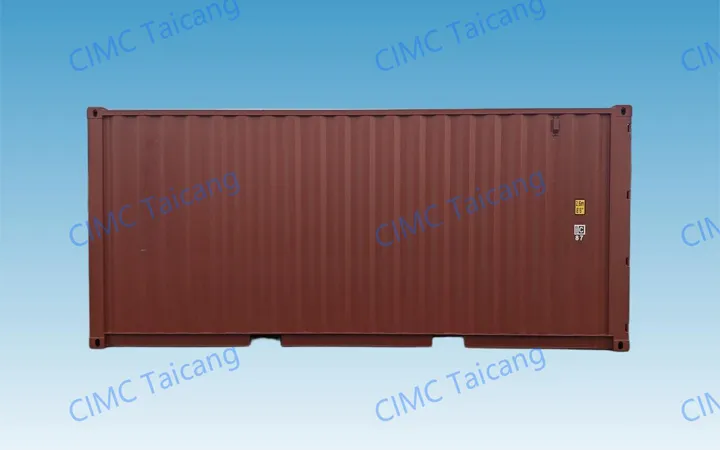
The 20ft GP container is the foundational unit of the entire ISO container system. Almost all global container capacity calculations are based on this size, making it the most fundamental building block in international shipping.
It is especially suitable for heavy and dense cargo where weight efficiency is more important than volume. Because of its strong structural integrity and compact footprint, it is widely used in industrial shipping, machinery export, and metal-based commodities.
This container is often chosen when cargo reaches weight limits before filling the container space. As a result, it is highly cost-efficient for dense shipments and remains a core choice for exporters dealing with heavy industrial goods.
Length: 6.06 m (20 ft)
Width: 2.44 m
Height: 2.59 m
Capacity: ~33 CBM
TEU: 1
Use cases:
Heavy cargo (steel, machinery)
Dense shipments
Export-heavy industries
Further Reading: 20ft Standard Container Overview
To better understand the most commonly used base unit in global containerized shipping and how it supports international logistics operations, you can explore our detailed guide:
What Is a 20ft GP Shipping Container? Size, Specs and Uses Explained
The 40ft GP container is the most widely used container type in global ocean freight. It is built on the same ISO modular framework as the 20ft container but offers double the length, making it significantly more efficient for medium-density and high-volume cargo.
This container is ideal for general cargo that does not exceed weight limitations but requires more space. It is commonly used across manufacturing supply chains, retail goods distribution, textiles, electronics, and packaged consumer products.
Due to its high volume efficiency, the 40GP is often the default choice for international exporters aiming to optimize shipping costs per cubic meter. It also integrates seamlessly into global port handling systems and intermodal transport networks.
Length: 12.19 m (40 ft)
Width: 2.44 m
Height: 2.59 m
Capacity: ~67 CBM
TEU: 2
Use cases:
General cargo export
Industrial products
Retail and consumer goods
Medium-density shipments

Further Reading: Standard Dry Container Overview
To better understand the most widely used container type in global shipping and how it differs from High Cube versions, you can explore our detailed guide:
What Is a 40 GP Container? Meaning, Dimensions and Uses Explained
The 40ft High Cube shipping container is an extended-height version of the standard 40GP container. While maintaining the same length and width, it offers additional vertical space, which significantly increases internal capacity.
This makes it particularly suitable for lightweight but high-volume cargo. Industries such as furniture manufacturing, home appliances, packaging, and e-commerce logistics rely heavily on this container type to maximize space utilization.
The 40HC has become one of the most commonly used containers in global trade lanes, especially on Asia–Europe and Asia–North America routes, due to its improved volumetric efficiency.
Length: 12.19 m (40 ft)
Width: 2.44 m
Height: 2.89 m
Capacity: ~76 CBM
TEU: 2
Use cases:
Lightweight bulky cargo
Furniture and home goods
E-commerce shipments
Packaging-intensive products

Further Reading: High Cube Container Specifications
To better understand how container height impacts volume, cargo planning, and freight efficiency in real-world shipping operations, you can explore our detailed guide:
What Is a 40 HC Container? Dimensions, CBM, Tare Weight and Uses Explained
The 45ft High Cube container is an extended-length container designed for maximum volume efficiency in large-scale logistics operations. It provides more internal space than the 40HC, making it suitable for high-volume cargo consolidation.
This container is widely used in regions such as North America and Europe where inland logistics systems support larger container formats. It is particularly effective for retail distribution and consumer goods supply chains, where reducing the number of containers per shipment is critical for cost efficiency.
By increasing length while maintaining standard width and height, the 45HC container helps optimize transportation cost per unit of cargo, especially for lightweight goods.
Length: 13.72 m (45 ft)
Width: 2.44 m
Height: 2.89 m
Capacity: ~85 CBM+
TEU: ~2.25
Use cases:
Large-volume shipments
Retail distribution
Consumer packaged goods
North American inland logistics

The 10ft container is a compact ISO-compatible container designed for small-scale logistics needs. Although not as widely used in global ocean freight, it plays an important role in localized storage and niche transport applications.
Its small footprint makes it highly practical for urban logistics, temporary storage solutions, and specialized industrial usage. It is often deployed in environments where space is limited or where full 20ft capacity is unnecessary.
The 10ft container is also frequently used in modular engineering applications, such as equipment housing or portable storage systems.
Length: 3.05 m (10 ft)
Width: 2.44 m
Height: 2.59 m
Capacity: ~15 CBM
TEU: 0.5
Use cases:
Small industrial cargo
Mobile storage units
Urban logistics
Temporary site applications
The 20ft High Cube container is a taller version of the standard 20ft container. It maintains the same footprint while offering increased vertical space, which provides additional flexibility for cargo stacking and loading.
Although less common than the 40ft High Cube, it is used in specialized logistics scenarios where height is more important than length. It is suitable for lightweight cargo that requires additional vertical clearance.
This container is often selected when exporters need more flexibility than a standard 20ft container but do not require a full 40ft unit.
Length: 6.06 m (20 ft)
Width: 2.44 m
Height: 2.89 m
Capacity: ~37 CBM
TEU: 1
Use cases:
Lightweight bulky goods
Specialized industrial cargo
Limited-volume shipments

Further Reading: 20ft Container Variants Explained
To better understand how compact High Cube containers differ from standard 20ft units and when they are used in global logistics operations, you can explore our detailed guide:
What Is a 20ft HC Container? Dimensions, Capacity and Key Benefits
The 48ft container is primarily used in North American inland logistics systems, particularly for trucking and rail transport. It is designed to maximize cargo efficiency within domestic transportation networks.
Compared to standard 40ft containers, the 48ft version offers additional capacity, making it suitable for large-scale retail distribution and manufacturing supply chains. It helps reduce the number of trips required for high-volume domestic freight.
Although not commonly used in international ocean shipping, it plays a crucial role in regional logistics optimization in the United States and Canada.
Length: 14.63 m (48 ft)
Width: 2.44 m
Height: 2.59 m
Capacity: ~78 CBM
TEU: ~2.4
Use cases:
Domestic trucking
Retail distribution networks
North American inland freight
The 53ft container is the largest widely used standardized container in North American logistics. It is primarily used in rail and truck transportation systems and is optimized for high-volume domestic freight movement.
Its large internal capacity makes it highly efficient for industries such as retail chains, e-commerce fulfillment, and large-scale manufacturing distribution. It enables cargo consolidation, reducing transportation frequency and improving cost efficiency.
However, due to its size, it is not suitable for international ocean shipping and is mainly confined to inland logistics systems.
Length: 16.15 m (53 ft)
Width: 2.44 m
Height: 2.59 m
Capacity: ~86–90 CBM
TEU: ~2.65
Use cases:
US inland logistics
E-commerce fulfillment
Large retail distribution
Rail and truck transport
The pallet wide container is a specialized ISO-compatible container designed to optimize pallet loading efficiency, particularly in European logistics systems.
Its internal width is slightly increased compared to standard containers, allowing it to better accommodate EUR pallets (1200×800 mm). This results in significantly improved space utilization and reduced empty gaps during loading.
It is widely used in FMCG supply chains, retail distribution, and warehouse logistics where pallet optimization directly impacts transportation cost efficiency.
Length: 12.19 m (40 ft equivalent)
Width: ~2.50 m (internal optimized width)
Height: 2.59 m / 2.89 m options
Capacity: ~68–78 CBM
TEU: 2
Use cases:
European retail logistics
FMCG distribution
Palletized cargo optimization
Warehouse-to-store supply chains
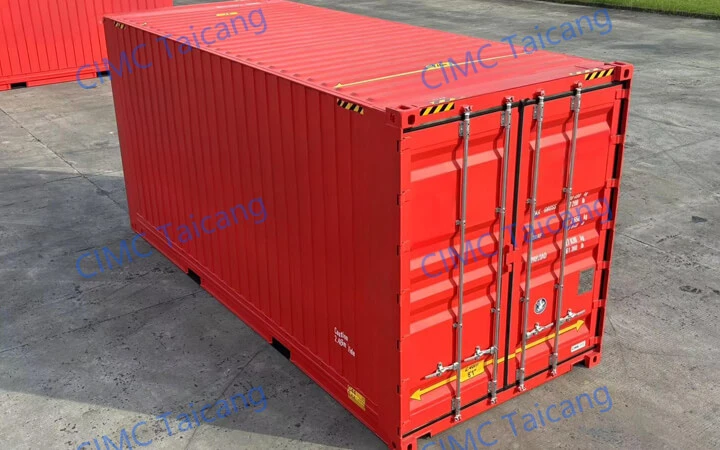
ISO container sizes are not limited to a few standard models. Instead, they form a modular global system based on 20ft and 40ft foundations, extended into larger, smaller, and region-specific configurations to support diverse logistics requirements worldwide.
In international shipping, GP (General Purpose) containers and HC (High Cube) containers are the two most commonly used dry container types under the ISO framework defined by ISO 668 Container Standards.
Although they share the same length and width, the key difference lies in height and usable internal volume, which directly affects cargo planning, cost efficiency, and load optimization.
The most fundamental difference between GP and HC containers is the external height.
GP (General Purpose) containers follow the standard ISO height of 8'6" (2.591m)
HC (High Cube) containers increase height to 9'6" (2.896m)
This additional 1 foot (approximately 30cm) may seem small, but in logistics operations it significantly impacts total cargo volume and stacking flexibility.
| Feature | GP (Standard Container) | HC (High Cube Container) |
| External Height | 8’6” (2.591m) | 9’6” (2.896m) |
| Internal Volume | Standard ISO volume | +10–15% more volume |
| Weight Capacity | Similar structural limit | Similar structural limit |
| Floor Area | Same | Same |
| TEU Value | 1 / 2 TEU | 1 / 2 TEU |
High cube containers provide approximately 10–15% more internal volume than standard GP containers, making them preferable when volume rather than weight is the limiting factor.
Further Reading: GP vs HC Containers in Detail
To better understand how these differences impact real-world shipping decisions, including cost efficiency, cargo optimization, and industry use cases, you can explore our detailed guide:
GP vs HC Containers – Key Differences Explained
Every container carries a unique identifier:
Owner Code (3 letters, e.g., CIMC)
Equipment Category (usually “U” for freight container)
Serial Number (6 digits)
Check Digit (1 number for validation)
Additionally, a size/type code (e.g., 42G1 for 40ft GP) indicates dimensions and characteristics. This system enables accurate global tracking and documentation.
Further Reading: ISO 6346 Container Identification Explained
To gain a deeper understanding of how the ISO container coding system works in real-world logistics operations, including how each code is assigned, interpreted, and used across global shipping networks, you can refer to our detailed guide:
What Is the ISO Container Coding System? (ISO 6346 Explained)
Premium ISO containers from manufacturers like CIMC Taicang use Corten steel (weathering steel) for superior corrosion resistance in marine environments. Corrugated side and end panels provide strength, while marine-grade plywood floors handle forklift traffic. Standard features include multiple lashing rings, forklift pockets (on many models), and robust corner castings for secure stacking and lifting.
International ShippingThe primary use — moving goods efficiently across oceans and continents.
Storage SolutionsSecure, weatherproof storage at construction sites, warehouses, ports, and remote locations.
Container ConversionsCreative repurposing into offices, retail shops, homes, cafes, workshops, and more.
Industrial UseOn-site manufacturing logistics, equipment housing, and temporary facilities.
Universal compatibility across global transport networks
Exceptional durability and long service life (often 15–25+ years)
High stackability (up to 8–9 high when loaded)
Cost efficiency through standardized handling
Proven safety and security features
Excellent resale and secondary market value
Heavy or dense cargo → 20GP
Balanced general export → 40GP
Bulky or volumetric goods → 40HC or 20HC
Maximum volume needs → 45HC
Special requirements (temperature, oversize, liquids) → Reefer, Open Top, Flat Rack, or Tank
Consider shipment size, cargo characteristics, destination infrastructure, and budget.
For consistent quality and competitive pricing, buying directly from a reputable manufacturer is the smartest choice. CIMC Taicang, part of the global CIMC Group, offers factory-direct supply of all major ISO container types with strict ISO-certified production, advanced quality control, bulk manufacturing capability, extensive customization options, and reliable worldwide delivery.
They reduce logistics friction, enable true intermodal transport, support efficient supply chains, and power the vast majority of world trade. Standardization has been a key driver of globalization.
Ready to source high-quality ISO standard containers? Contact the CIMC Taicang team today for fast, transparent quotations on 20ft, 40ft, High Cube, and specialized containers. We support OEM customization, bulk orders, and global shipping solutions.
Request a quote now and let our experts help you select the perfect ISO containers for your business needs.